










Cinema-like picture quality via a new optical engine
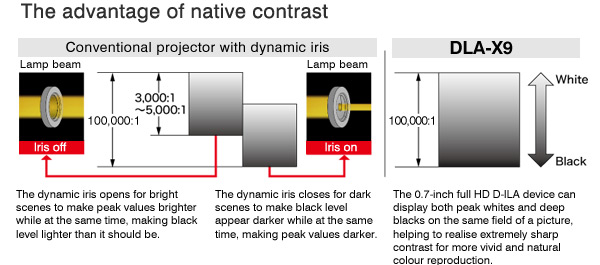
100,000:1 native contrast ratio is achieved
The newly developed optical engine features a new wire grid and a redesigned aperture that reduce excess light leakage to negligible levels, making possible a remarkable 100,000:1 native contrast ratio. High contrast and film-like quality offered by the original D-ILA devices also help to ensure smoother greyscale, truer black levels, and increased depth.
- *70,000:1 for the DLA-X7/ 50,000:1 for the DLA-X3
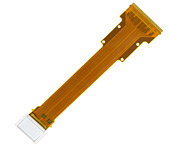
JVC-developed D-ILA panel module
Many years in development and supported by technical expertise, the D-ILA panel module is a JVC original LCOS (liquid crystal on silicon) reflective LCD panel module for projectors that guarantees precise video reproduction. The D-ILA device provides smoother and natural-looking pictures thanks to more closely spaced pixel elements, which help to minimise visual artefacts such as the “screen-door effect”. And, when this device is combined with the new optical engine, cinema-like quality picture is assured.
JVC’s exclusive D-ILA device
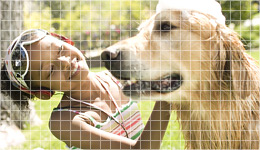
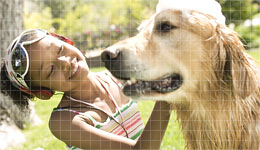
Film-like picture without pixel gaps or the "screen-door effect".
*Simulated picture to demonstrate picture enhancement.
JVC’s exclusive Real Colour Imaging Technology (DLA-X9/DLA-X7)
JVC’s exclusive Real Colour Imaging Technology achieves excellent colour reproduction faithful to the original source by incorporating a colour temperature setting equivalent to that of a Xenon lamp, a popular light source used in cinemas, and by creating original colour profiles, which help enhance picture quality to levels that go beyond expectations.
Adobe RGB for an expanded colour spectrum
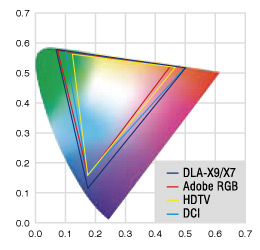
The new optical engine allows for an expanded colour spectrum by employing an innovative colour filter, which results in colour reproduction with coverage wider than the Adobe RGB colour space and a 20% increase* in the colour reproduction spectrum compared to conventional JVC projector models. With this increase in colour space, the new optical engine can more vividly reproduce colours such as the green of trees, the blue of oceans, etc., which were difficult to recreate accurately up until now.
- Note: When compared to the DLA-HD950.
- Adobe is a trademark or registered trademark of Adobe Systems Incorporated in the U.S. and/or other countries.
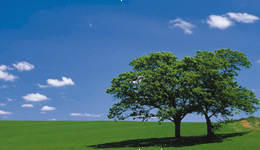

Simulated pictures to emphasise the difference in contrast ratios.
DLA-X9/X7 picture modes and colour profiles
JVC has succeeded in creating exclusive colour profiles by analysing and focusing on the colour information of original film prints. And when these profiles are combined with the array of available picture modes, viewers can enjoy twelve different types of image reproduction.
Extreme planarization technology
| Picture modes | Colour profiles | |
|---|---|---|
| Film | Film 1 | This original JVC colour profile was created by analysing colour space produced when a Xenon lamp is used to project motion-picture film made by the Eastman Kodak Company. |
| Film 2 | This original JVC colour profile was created by analysing colour space produced when a Xenon lamp is used to project motion-picture film made by the Fujifilm Corporation. | |
| Cinema | Cinema 1 | A profile providing rich reproduction of cinema-specific colours. |
| Cinema 2 | A profile similar to that of DCI*1 colour specifications. | |
| Standard | A profile similar to that of HDTV*2 colour specifications. | |
| Animation | Anime 1 | A profile ideal for CG animation. |
| Anime 2 | A profile ideal for cel (traditional) animation. | |
| Standard | A profile similar to that of HDTV*2 colour specifications. | |
| Natural | Standard | A profile similar to that of HDTV*2 colour specifications. |
| Video | A profile ideal for drama/sports programmes. | |
| Vivid | A profile ideal for vivid colours found in video games, etc. | |
| Adobe | The colour profile for Adobe RGB. | |
| Stage | Stage | A profile ideal for listening to live music, orchestras, and operas or watching theatrical plays. |
| Standard | A profile similar to that of HDTV*2 colour specifications. | |
| 3D | 3D | A profile ideal when 3D glasses are used. |
| Standard | A profile similar to that of HDTV*2 colour specifications. | |
| Vivid | A profile ideal for vivid colours found in video games, etc. | |
- *1: Digital Cinema Initiative (DCI)
- *2: High Definition Television (HDTV)
DLA-X3 picture modes and colour spaces
Picture modes and colour spaces
Users can select from six picture modes that are designed to perfectly match the content and ensure impressive image quality. Up to three different colour spaces can also be used to achieve the ideal colour space to complement the picture modes.
| Picture modes | |
|---|---|
| Film | Picture mode ideal for reproducing film-like textures. |
| Cinema | Picture mode that enhances the vivid colours of DCI*1 specifications. Ideal for viewing of all types of movies. |
| Animation | Picture mode ideal for viewing animation movies. |
| Natural | Picture mode providing natural colours and gradations, making it ideal for viewing video sources such as dramas. |
| Stage | Picture mode ideal for viewing or listening to live music and stage performances. |
| 3D | Picture mode ideal for viewing 3D video content. |
| Colour spaces | |
|---|---|
| Standard | Colour space similar to that of HDTV*2 specifications. |
| Wide 1 | Colour space similar to that of DCI specifications. |
| Wide 2 | Colour space wider than Wide 1 |
- *1: Digital Cinema Initiative (DCI)
- *2: High Definition Television (HDTV)
Colour temperature setting of a Xenon lamp
In yet another way to achieve a film-like picture, the Real Colour Imaging Technology incorporates a colour temperature setting equivalent to that of a Xenon lamp, a popular light source used in cinemas. The Xenon-mode colour temperature facilitates the authentic reproduction of colours similar to those of film in cinemas, while using highly efficient and economical ultra high-pressure mercury lamps.
Conventional colour temperature setting

Xenon-mode colour temperature setting

*Simulated picture to demonstrate picture enhancement.
New Clear Motion Drive improves pictures with rapid movement
As an original manufacturer of high-speed drive technology, JVC has further enhanced its detection interpolation technology through high-precision interpolation algorithms to develop a new Clear Motion Drive that helps to smooth movement in the picture. By reducing blur that can be generated in high-speed scenes such as sports events, etc., the new Clear Motion Drive makes the overall picture much smoother and clearer. Additionally, as the amount of picture delay is very limited, the DLA-X9/X7/X3 projectors are also well suited for playing video games.

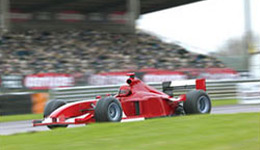
Simulated pictures to emphasise the difference between Clear Motion Drive mode turned on and off.
High-performance 2x motorised zoom lens
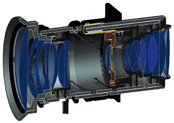
The high-performance 2x zoom lens features a large-diameter, all-glass lens system with 17 elements in 15 groups including an ED (extra low dispersion) lens to guarantee the faithful projection of full HD images. This lens system not only enhances focusing performance but also significantly reduces chromatic aberration and colour bleeding to better project images with ample depth. What’s more, it is also equipped with a 16-step aperture function that enables adjustment of brightness according to user preferences and/or operating environment to realise the deepest black possible.
- * 3-step for the DLA-X3
Certified by ISF (Imaging Science Foundation) (DLA-X9/DLA-X7)

The DLA-X9 / DLA-X7 projector has been licensed with the ISF C3(Certified Calibration Controls) mode, enabling trained dealers to professionally calibrate it to your choices of screen surface, lighting environments and video sources and then securely store precision settings into the projector. This helps to ensure reproduction of film or video content accurate to the source and excellent picture quality optimised for specific environments.
